Twenty Years of Rehearsals for a Conversation I Was Terrified to Have

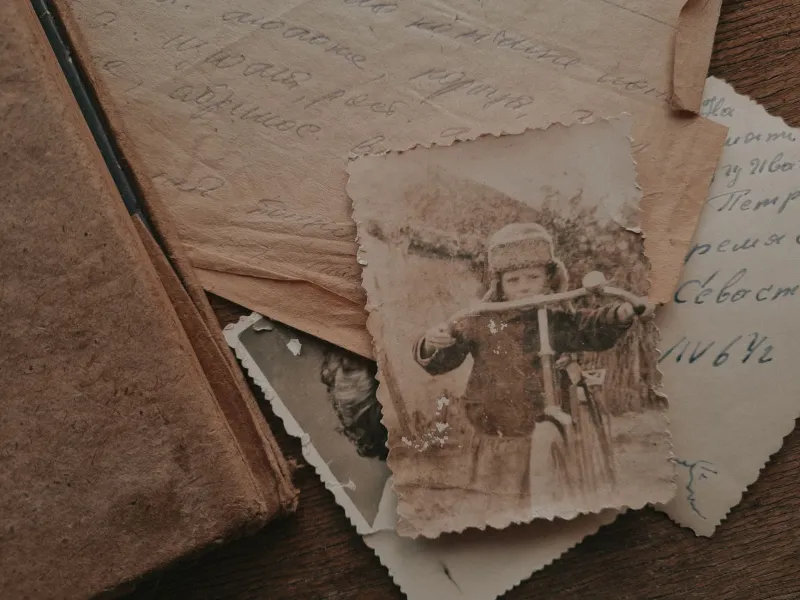
Photo: Kandukuru Nagarjun from Bangalore, India, CC BY 2.0, via Wikimedia Commons
There's a version of me that exists only in my head — a braver, more articulate version who said the right thing at exactly the right moment. That version of me apologized to my brother Danny in 2004, maybe 2007 at the latest. She sat across from him at a diner somewhere in Ohio, slid her coffee cup aside, and said the words clearly and without flinching.
I am not that version of me.
The real version of me spent twenty years perfecting a speech I never delivered. I revised it seasonally, the way you'd update a resume. I added new context when I learned new things about myself. I softened the phrasing after I started therapy. I hardened it again during the years I was angry at him for not reaching out first. The speech became its own living document, a monument to everything I was afraid to actually do.
The Thing That Started It All
I won't go deep into the original wound — that's Danny's story as much as mine, and he hasn't agreed to be in this one. But the short version is this: when our dad got sick in 2001, I made a decision that hurt my brother badly. I chose convenience over loyalty. I rationalized it for years using every tool available to a twenty-something who didn't yet know how to sit with discomfort. I told myself he'd understand eventually. I told myself he was overreacting. I told myself time would smooth it over without my having to do any of the smoothing.
Time did not smooth it over.
What time did instead was calcify everything. The longer I waited, the more enormous the apology needed to be. And the more enormous it needed to be, the more terrifying it became to attempt. By year five, I felt like I'd need to rent out a stadium and hire a skywriter. By year ten, I genuinely believed that any apology I gave would be so insufficient that it would only make things worse. So I kept rehearsing. I kept waiting to become the person who could do it right.
What Perfectionism Does to Relationships
Here's what nobody tells you about being a perfectionist when it comes to emotional labor: the standard keeps rising. Every year I waited, the bar for what counted as a "good enough" apology climbed higher. My silence wasn't neutral — it was compounding interest on a debt I refused to acknowledge out loud.
I've talked to enough people now to know I'm not alone in this. There's a specific kind of paralysis that comes from caring too much about getting something right. It looks like thoughtfulness from the outside. From the inside, it feels like being stuck in wet concrete while the person you love slowly walks out of frame.
Danny and I were cordial at family events. We texted occasionally — birthdays, football scores, the kind of content that signals "I haven't written you off" without requiring anything real. We'd built a functional relationship out of the ruins of a close one, and I told myself that was enough. That it was probably what he wanted too.
I told myself a lot of things.
The Phone Call I Didn't Expect
In the spring of 2023, my aunt called to tell me Danny had been in a car accident. He was okay — shaken up, a broken collarbone, nothing life-threatening. But something about hearing the words "Danny" and "accident" in the same sentence without warning knocked something loose in me.
I sat in my kitchen for a long time after we hung up. Not crying, exactly. Just sitting with the sudden, nauseating clarity of what it would have meant if the call had gone differently. All those rehearsals. All those revised drafts. And what if there had simply been no more time?
I called him that same night. My hands were doing that thing they do when I'm scared — going cold and slightly numb, like my body is trying to opt out. I hadn't planned what I was going to say. For once, I didn't have the speech.
What came out was imperfect and stumbling and probably not even half as eloquent as the version I'd been workshopping for two decades. I told him I was sorry. I told him I'd been sorry for a long time and that I'd let fear talk me out of saying it over and over again. I told him I didn't expect anything from him — not forgiveness, not a reciprocal confession, nothing. I just needed him to know.
He was quiet for a moment. Then he said, "I know. I've known for a while."
What I Got Wrong About Forgiveness
I had constructed an entire internal mythology around this apology. I imagined it would either heal everything dramatically or blow up whatever fragile peace we'd managed to build. I imagined his reaction would be the thing that determined whether it was worth doing.
What I hadn't considered was the possibility that the apology wasn't primarily for him.
Danny and I talked for almost two hours that night. Not about the original hurt — not really. We talked about our dad, about growing up, about the particular loneliness of being siblings who'd let too much go unsaid for too long. We didn't resolve everything. We didn't cry and hug and promise to call every Sunday. Real life doesn't usually work that way.
But something shifted. Not between us, exactly — though that came later, slowly, the way good things usually do. Something shifted inside me. The version of myself I'd been dragging around for twenty years — the one who owed a debt she couldn't figure out how to pay — she got a little lighter.
The Cost of Waiting
I think about the years sometimes. Not with pure regret, because I've gotten old enough to know that beating yourself up about the past is its own form of avoidance. But I do think about the Christmases that were a little colder than they needed to be. The conversations we didn't have. The closeness we might have found sooner.
Perfectionism dressed up as thoughtfulness cost me two decades of a relationship with my brother. The speech was never going to be perfect. The moment was never going to be ideal. The person I was waiting to become — the one who could do this flawlessly — she was never going to show up, because she doesn't exist.
What exists is me. Imperfect, late, and finally willing to say so.
If you've been rehearsing something for years, I'm not here to tell you that you'll regret it if you wait. Maybe you won't. But I'll tell you this: the version of the conversation that lives in your head will always be more controlled, more eloquent, and more frightening than the real one. The real one is just two people, doing their best, trying to find their way back to each other.
It doesn't have to be perfect. It just has to happen.