I Spent Years Guarding My Mother's Reputation — Until I Realized the Person I Was Actually Burying Was Me

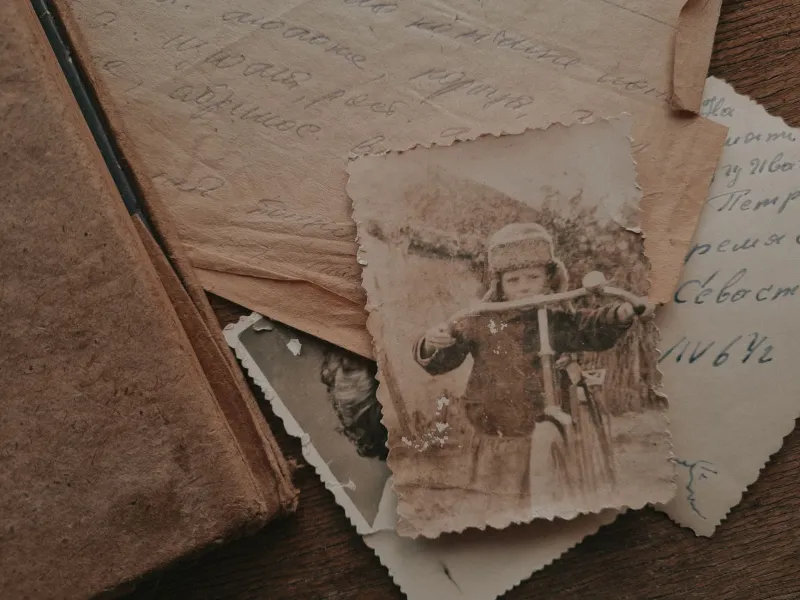
Photo: Ferdinand Reus, CC BY-SA 2.0, via Wikimedia Commons
The first lie I remember telling on my mother's behalf, I was seven years old.
A neighbor had come to the door while my mother was in the middle of one of her episodes — the kind that involved drawn curtains and a voice that came out low and strange, the kind I'd already learned not to name out loud. I answered the door. I said she wasn't feeling well. The neighbor left a plate of brownies and a sympathetic smile, and I carried both inside feeling like I'd done something good.
For the next thirty years, I kept doing it. The methods got more sophisticated. The stakes got higher. But the basic transaction stayed the same: I saw something true about my mother, and I covered it over so the world wouldn't have to see it too.
Learning the Rules of the House
Every family has things that don't leave the house. I understand that now in a way I couldn't when I was young — some of it is privacy, some of it is shame, and a lot of it is just the ordinary human instinct to protect the people you love.
But there's a version of that protection that crosses a line somewhere. That becomes less about shielding someone and more about managing a story. And when a child is the one doing the managing, something gets badly out of order.
My mother struggled with her mental health in ways that were real and serious and, I want to be clear, not her fault. That part I've made peace with. What took me much longer to reckon with was the fact that her struggles had real effects on me — effects I was not allowed to acknowledge, because acknowledging them would complicate the narrative.
The narrative was: she did her best. She loves you. She's had a hard life.
All of those things were true. None of them were the whole story.
The Invisible Job
By the time I was in my twenties, I had internalized the role so completely that I didn't even recognize it as a role anymore. It was just how I existed in relation to my mother.
I carefully managed what I told friends about my childhood, instinctively softening anything that might cast her in a difficult light. When family members would bring up hard moments from the past, I was the one who smoothed it over — redirected the conversation, offered context, reminded everyone that she was doing better now. I was the buffer, the interpreter, the spin doctor.
And I was doing all of this while also, quietly, carrying things I had never told anyone.
Things like: there were years I was afraid in my own home. There were years I parented myself because no one else was available to do it. There were moments I needed someone to show up for me and the role was simply not cast.
I didn't talk about those things because talking about them felt like a betrayal. And betraying my mother felt, on some deep and irrational level, like it might actually destroy her.
The Moment the Math Stopped Working
I was thirty-eight when I finally started therapy in earnest — not the kind where you go for six sessions and feel slightly better, but the kind where you actually dig. My therapist was a small, unhurried woman who had a gift for asking questions that sounded simple and weren't.
About three months in, she asked me to describe my relationship with my mother. I launched into my standard version — the context, the compassion, the she did her best.
My therapist listened to all of it. Then she said, quietly: But what was it like for you?
I didn't have an answer ready. I'd been so practiced at framing my mother's experience that I had never really developed a fluent language for my own.
That question cracked something open. Not in a dramatic, movie-montage way — more like a slow, uncomfortable thaw. Over the following months, I started locating things I'd buried so deep I'd almost convinced myself they weren't there.
The Difference Between Compassion and Erasure
Here's the thing about protecting someone's image: it requires you to make yourself smaller. Every time I told a softened version of my story, I was implicitly agreeing that her narrative was more important than mine. That her reputation was worth more than my reality.
I don't think I'm a bad person for having done that. I think I was a loyal daughter who learned early that loyalty meant silence, and I did what I was taught.
But I've come to understand that compassion and complicity are not the same thing. You can hold genuine love for someone and still tell the truth about how their actions affected you. Those two things can exist at the same time. In fact, I'd argue that the version of love that requires you to erase yourself isn't really love at all — it's fear dressed up in a more acceptable coat.
I can love my mother and also say: some of what happened to me wasn't okay. Both of those are true. I spent a long time believing they couldn't be.
What Telling the Truth Actually Looked Like
I want to be honest here: telling my truth didn't look like a dramatic confrontation or a tearful breakthrough conversation with my mother. Life isn't usually built that way.
It looked like telling my therapist the real version of things, without the softening. It looked like calling a close friend and saying can I tell you something I've never said out loud? and then actually saying it. It looked like writing things down in a journal I didn't show anyone, just to prove to myself that I could put words to them without the sky falling.
Slowly, it started to look like telling my own story in my own words — and noticing that I was still standing afterward.
My relationship with my mother is complicated. It probably always will be. But it's more honest now than it's ever been, even if most of that honesty lives inside me rather than between us.
The Person Who Was Waiting Underneath
What I didn't expect, when I started letting go of the keeper-of-the-story role, was how much of myself I found underneath it.
I had been so busy managing her image that I'd never fully developed my own. My sense of who I was had been organized, for decades, around the function I served in her life. Without that function as the center of gravity, I had to figure out who I actually was.
That process is ongoing. It's not always comfortable. But it is, without question, the most real thing I've ever done.
If you're carrying someone else's story at the expense of your own, I want you to know: your truth doesn't have to be an act of cruelty to be an act of honesty. You can tell it gently. You can tell it privately. You can tell it slowly.
But you do have to tell it. At least to yourself.
That's where it starts.