The Questions My Family Taught Me Never to Ask — And What Happened When I Finally Asked Them
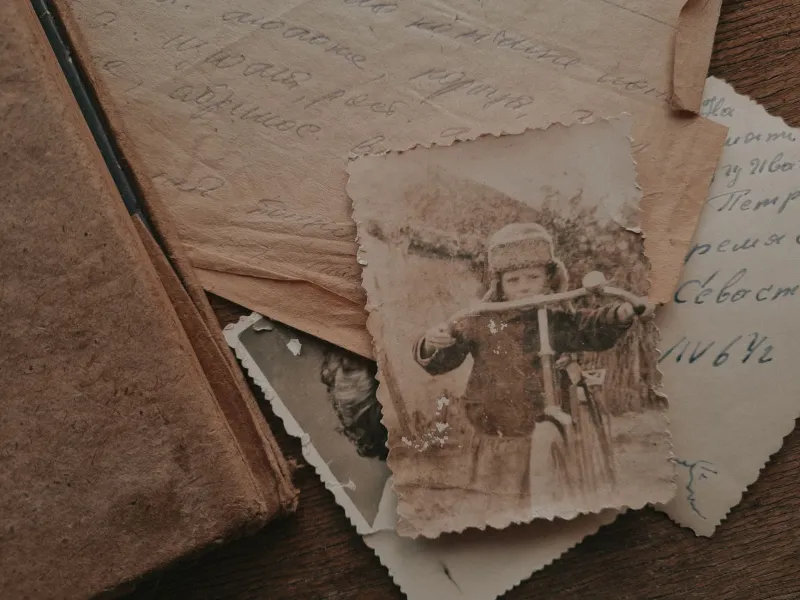
My grandmother had a drawer in her kitchen that nobody opened. Not a locked drawer — there was no key, no latch, nothing dramatic like that. It was just a regular drawer in a regular kitchen in a house in central Ohio, and somehow, from the time I was old enough to be curious about things, I understood with complete clarity that it wasn't mine to open.
I don't know who taught me that. I don't remember a conversation, a warning, a specific moment of instruction. It was simply knowledge I absorbed, the way kids absorb everything — through atmosphere, through the way adults go quiet at certain moments, through the almost imperceptible tightening that happens in a room when a subject comes too close to the surface.
My family was fluent in that kind of silence. We all were.
What Silence Looks Like From the Inside
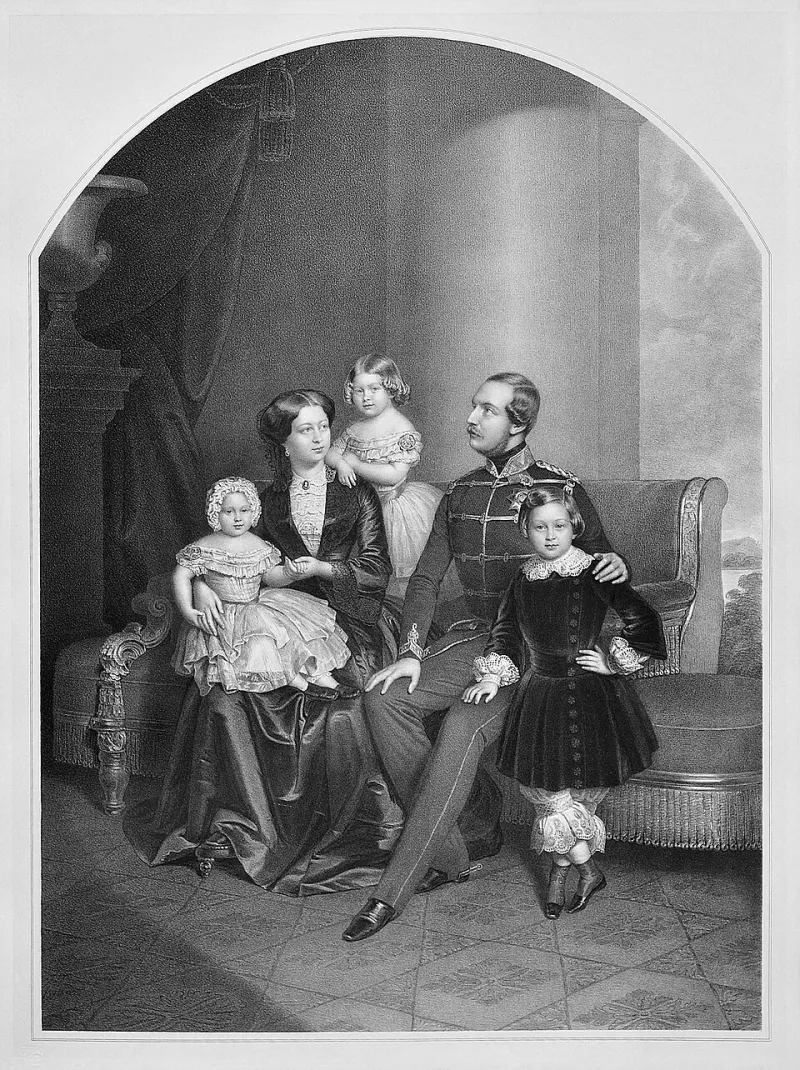
Growing up, I thought every family was like mine. I assumed that the careful avoidance of certain topics — my grandfather's years before he married my grandmother, why my mom and her sister hadn't spoken for a stretch of my childhood, what exactly my uncle had done that made his name disappear from family stories — was just how families worked. Private. Compartmentalized. Neat.
It wasn't until I was in college, sitting in a friend's kitchen in Michigan while her family talked openly about everything from her dad's bankruptcy to her brother's stint in rehab, that I realized some families just... talked. About things. Real things. Without anyone leaving the room or changing the subject or suddenly remembering they'd left something on the stove.
I remember driving back to campus that Sunday feeling something I couldn't name at the time. I know now what it was: it was longing. And underneath the longing, something older and angrier — the beginning of a question I hadn't yet let myself fully form.
The Shape of What I Didn't Know
Here's what generational silence does that nobody really prepares you for: it doesn't just keep information from you. It shapes you. The absence of a story is still a story. You fill the gaps with whatever you have — assumption, imagination, anxiety. You build your sense of self around holes you don't even know are there.
I spent years in relationships that mirrored my family's communication patterns without realizing it. I was attracted to people who were emotionally unavailable in familiar ways. I was conflict-avoidant to a degree that bordered on self-erasure. I made decisions — about my career, about where to live, about what I wanted my life to look like — without understanding that many of those decisions were reactions to things I'd never been told.
Therapy helped me see some of this. But therapy can only work with what you bring into the room, and I had been trained my whole life to bring very little.
The Phone Call That Changed Everything
My grandmother died when I was thirty-seven. In the weeks after her funeral, while my mom and her siblings sorted through the house, my aunt called me — not my mom, me — and said, almost without preamble, "I think it's time someone told you some things."
I sat down on my kitchen floor. I don't know why. My legs just made that decision.
What followed over the next hour was the kind of conversation I'd spent my whole life being shielded from. My grandfather's first marriage, which nobody had ever acknowledged. A child from that marriage — a half-uncle I'd never known existed — who'd tried to make contact years ago and been turned away. My grandmother's deep shame around all of it, and the way that shame had calcified over decades into family law: we do not speak of this.
There was more. There's always more, once someone opens that door.
Asking the Questions Out Loud
After that phone call, I did something I'd never done before. I started asking. Directly, without the usual softening or the careful approach designed to give people an exit ramp. I called my mom. I asked her what she knew and when she'd known it. I asked my other aunt. I drove to visit an elderly cousin of my grandmother's who, it turned out, had been waiting for someone to ask for years.
Not everyone was grateful for the questions. My mom was defensive at first, then sad, then — after a couple of conversations that were genuinely hard — something like relieved. One of my aunts shut me down completely and hasn't been particularly warm since. That's a loss I've had to sit with.
But the picture I assembled, piece by piece, over about two years of asking and listening and sometimes just being willing to sit in uncomfortable silence of a different kind — the kind that comes after a hard truth rather than before it — that picture changed something fundamental in how I understood myself.
What the Inheritance Actually Was
Here's what I learned: the silence wasn't malicious. It was protective, in the way that a lot of harmful things are protective. My grandmother came from a generation and a background where shame was managed through omission. She genuinely believed she was sparing her children — and then her grandchildren — from pain. She wasn't wrong that knowing things can hurt. She was wrong that not knowing is safe.
Because what gets passed down in silence isn't nothing. It's the silence itself. It's the anxiety that lives in unasked questions. It's the vague sense of incompleteness that you carry without being able to explain it. It's the patterns you repeat because you don't have enough information to understand where they came from.
I think about my half-uncle sometimes — the man who tried to find his family and was turned away. I found him, eventually. We've exchanged a handful of emails. It's awkward and tentative and nothing like what either of us probably imagined. But he exists. He's real. And pretending otherwise didn't protect anyone.
Breaking the Pattern
I have a daughter. She's nine. And I talk to her — probably too much, honestly, in the way that people who grew up in silence sometimes overcorrect. I tell her about hard things in age-appropriate ways. I answer her questions instead of redirecting them. When she asks about family members who are complicated or absent or gone, I give her real answers, scaled to what she can hold.
I'm not going to pretend I've figured it all out. I still catch myself reaching for the deflection, the vague answer, the subject change. Those reflexes run deep. But I catch them now, and that's the difference.
The drawer in my grandmother's kitchen, as far as I know, is gone now — the house was sold, the kitchen renovated by someone who had no idea what they were clearing out. But I've spent the last few years opening every metaphorical version of it I can find.
Some of what I've found has been painful. Some of it has been stranger than I expected. All of it has been mine to know.
And that, I've come to believe, is the whole point.