The Rules Nobody Wrote Down — And What Happened When I Started Breaking Them
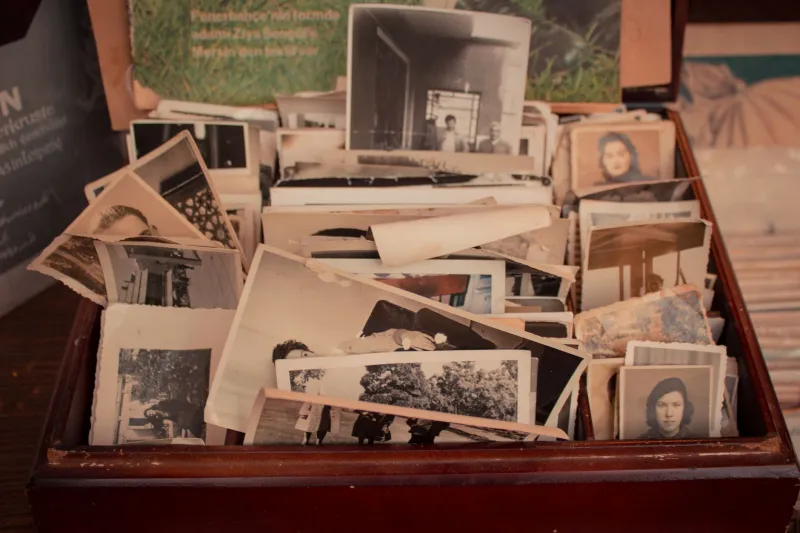
There was a photograph on my grandmother's mantel for my entire childhood that nobody ever explained. A young man in a military uniform, serious-faced, standing in front of what looked like a car dealership in the 1960s. I asked about him exactly once, when I was maybe seven, and my grandmother's face did something that closed like a book snapping shut, and my mother's hand found my shoulder and steered me toward the kitchen for a snack. The photograph stayed on the mantel for another thirty years. The man in it was never named.
That's how I learned the first rule: some questions don't get answered. They just get redirected.
The Unwritten Constitution
Every family has one. A set of operating principles so thoroughly absorbed that they stop feeling like rules and start feeling like reality. You don't notice them until you're in someone else's house and you realize, with a small shock, that their family just talks about the thing your family would have cleared the table to avoid.
In my family, the rules were layered and specific. Money was private — you didn't ask what anyone earned, what anything cost, or what happened to the house in Memphis that nobody talked about. Emotions above a certain volume were considered a performance rather than a genuine feeling, which meant that the people who cried at the table were dramatic and the people who didn't were strong. Certain relatives existed in a kind of narrative quarantine — mentioned only in the past tense, never called, their absence explained by nothing more than it's complicated.
And underneath all of it, the deepest rule: the family was fine. Whatever had happened, whatever was happening, the family was fine and would remain fine as long as no one looked too hard at anything.
I followed these rules faithfully for a long time. Not because I agreed with them, but because I didn't have the language to name them, let alone challenge them. They were the water I swam in.
The First Crack
I was thirty-four when my dad had a minor health scare — nothing serious in the end, but serious enough that I drove eight hours to be there and sat in a hospital waiting room with my mother and my aunt for the better part of a day. We talked about everything except what was happening. The weather. A cousin's new job. Whether the hospital cafeteria had gotten worse since the last time someone had occasion to be in it.
At some point my aunt went to get coffee and it was just my mother and me, and I looked at her — really looked at her, at how tired she was, how tightly she was holding her own hands in her lap — and I said, Are you scared?
She looked at me like I'd asked something in another language.
And then, slowly, she said: Yes. I am.
We sat with that for a minute. No one redirected anyone to the kitchen. Nothing closed. My aunt came back with the coffee and my mother's face had shifted, just slightly, into something more honest than I'd seen on it in years.
That was the crack. Small enough that you could miss it. Big enough that I couldn't stop thinking about it.
Breaking Rules Without Breaking People
Here's what I want to say carefully, because I think it matters: I did not approach this like an intervention. I didn't sit my family down and announce that I'd identified our dysfunction and was now prepared to heal us. That would have gone badly. That's not how families work, and honestly, it's not how I work either.
What I did was quieter. I started asking questions — small ones, specific ones, framed with genuine curiosity rather than accusation. I asked my mother about her childhood in a way I never had before, not as a therapeutic exercise but because I actually wanted to know. I asked my uncle about the years he spent out west before anyone in the family talked about him again. I asked about the photograph.
Some of those questions landed and opened things up. Some of them hit the old wall and I let them. I learned to hold the questions lightly — to offer them without demanding that they be answered, to make space for the truth without insisting it arrive on my timeline.
What surprised me was how often people wanted to answer. How much was sitting just below the surface, waiting for someone to make it safe enough to say out loud.
The man in the photograph, I eventually learned, was my grandmother's brother. There had been a falling out — something about money, something about a woman, something that happened in the early seventies and calcified into silence. By the time I asked, my grandmother had been gone for six years. My mother told me what she knew, which wasn't much, and we sat with the not-knowing together in a way that felt more honest than the decades of careful avoidance.
What Honesty Actually Does to a Family
I think I expected one of two outcomes when I started gently dismantling the unwritten rules. Either nothing would change — the walls would hold — or everything would fall apart. The truth was messier and better than either of those.
Some conversations changed things quietly and permanently. My relationship with my mother is different now — not fixed, not without friction, but more real in a way that I value more than smooth. We've talked about things I spent decades assuming were off-limits, and most of the time, the talking was less dangerous than the silence had been.
Some family members were not interested in the new version of things, and I had to make peace with that. Not everyone wants the rules examined. Some people built their lives inside those walls and the walls are load-bearing for them. I try to respect that without letting it stop me from living differently.
And some things, I found, genuinely didn't need to be said. The silence around certain things wasn't always suppression — sometimes it was just the passage of time, the natural erosion of old pain into something that didn't require excavation. I learned to tell the difference between the silences that were protecting something and the silences that were just quiet.
What Gets Built When the Rules Come Down
I know my family better now than I did ten years ago. That sounds like it should be obvious — of course you know people better over time — but this was different. This was intentional. This was me deciding that proximity wasn't the same as closeness, and that I wanted the real thing.
My sister called me last spring, out of nowhere, to tell me something she'd been carrying for years. She said she'd been waiting until she thought I could handle it. I told her I'd been waiting for the same thing from her.
We laughed, both of us, at how long we'd been protecting each other from the truth.
The photograph is in a box now, somewhere in my cousin's attic. I don't know the man's full story and I probably never will. But I know his name. And that feels like enough — like the first real sentence of something that was too long left unwritten.