Everything I Meant to Say — From the Neck Down in Hot Water
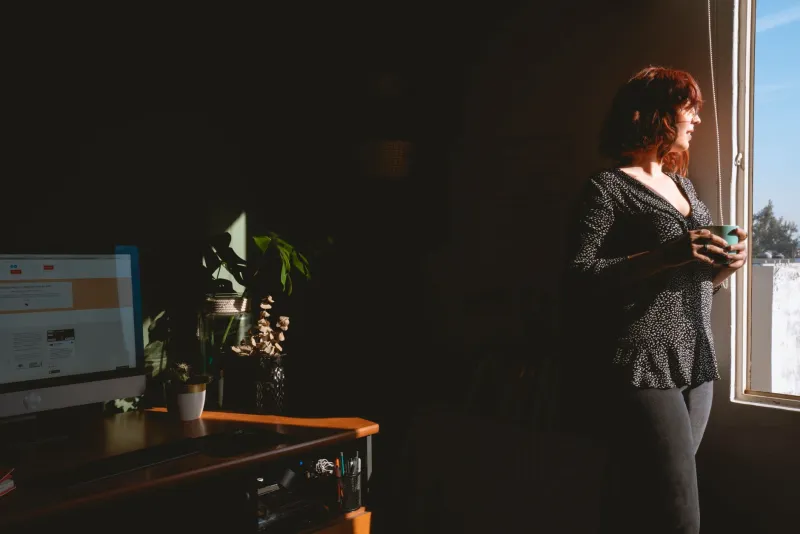
I have given some genuinely excellent speeches in my shower. Calm, clear, emotionally precise — the kind of communication that therapists hold up as a gold standard. I've set boundaries with the shampoo bottles. I've explained my feelings to the grout. I have, on more than one occasion, arrived at a profound and articulate conclusion about a relationship problem while conditioning my hair, only to walk into the kitchen twenty minutes later and say nothing at all when the moment arrived.
If you've ever done this, you already know what I mean. And if you've never done it, I'd gently suggest you might be lying to yourself.
The Architecture of the Private Speech
There's a very particular kind of courage that only exists in private. It's the courage of the car monologue, the journal entry, the 2 a.m. notes app draft you never send. It's real courage in some sense — you're actually working through something, actually accessing the truth of how you feel — but it operates in a zero-risk environment, which is exactly what makes it feel so good and exactly what makes it so easy to stay there.
For a long time, I told myself the rehearsal was the work. That thinking it through so carefully meant I'd processed it. That the clarity I found in private would somehow transfer automatically to the actual conversation.
It doesn't. That's not how any of this works.
I grew up the middle kid in a loud family in the mid-South, where talking over each other was basically the primary love language and whoever could hold the floor longest won. I was never the loudest. I was the one who watched and waited for an opening and then, when the opening came, usually let it close again without stepping through. I learned early that timing a conversation in my family was like trying to merge onto a highway with no acceleration lane — by the time I was ready, everyone had moved on.
So I moved the conversation inside my own head, where the timing was always perfect.
What Gets Lost in the Translation
The problem with keeping everything internal isn't just that the other person never hears it. It's what the silence does to you over time.
Every unsaid thing is a small withdrawal from your own sense of self. You start to believe that your perspective isn't worth the disruption. That your feelings are a burden. That the relationship — whatever relationship it is — can only survive if you keep your real self at a comfortable remove.
I had a friendship for years that was built almost entirely on the version of me that never pushed back. She was someone I genuinely loved, but she had a habit of making plans and then canceling last minute, and every single time it happened, I had the shower speech ready. The one where I explained, calmly and without drama, that it made me feel like an afterthought. That I needed a little more reliability from the people I invested in.
I never gave that speech. Not once in four years.
What I gave her instead was a version of me that said no worries, totally fine every time — until I had so much unexpressed frustration banked that I stopped answering her texts altogether. She never knew why. Honestly, if she'd asked, I'm not sure I could have explained it cleanly by then. The specific grievances had all blurred into one big amorphous sense of being done.
That's what self-censorship costs you. Not just the moment. The whole relationship, quietly, from the inside.
The Turning Point Was Embarrassingly Small
I want to tell you there was a dramatic catalyst. A confrontation, a crisis, a moment of cinematic clarity. There wasn't.
What there was: a Tuesday evening, a phone call with my sister, and a completely mundane disagreement about where we were going to host Thanksgiving. She made an assumption about my house, about my time, about my willingness — and I felt the familiar pull toward sure, whatever works for you.
I heard myself start to say it. And then I stopped.
I don't know exactly what happened in that pause. Something just got tired. Not angry, not dramatic — just genuinely, quietly tired of the distance between what I thought and what I said.
I told her it didn't work for me that year. I told her I needed someone else to take it on. I said it plainly, without a three-paragraph apology attached.
She said, Oh, okay. Yeah, we can do it at Mom's.
That was it. That was the whole thing.
The Shower Rehearsal Has a Purpose — Just Not the One I Thought
I've reframed how I think about those private speeches now. They're not a substitute for the real conversation. They're a first draft.
The shower is where I figure out what I actually feel, underneath the noise of how I think I should feel. It's where I locate the real sentence — the one without the hedges and the softeners and the qualifiers I'll add later to make it easier to swallow. The rehearsal has value. I just can't let it be the final performance.
So now I do something uncomfortable: I take the clearest sentence from the draft and I actually say it. Not perfectly. Not with the same fluency I had alone. Real conversations are messier than shower conversations — people interrupt, the timing is off, someone's already in a mood about something else entirely. But the thing gets said. And that matters more than how smoothly it lands.
I've had some of those conversations turn out badly. I've also had some turn out better than anything I rehearsed. And I've learned that the ones in the middle — the ordinary, slightly awkward, imperfect ones — are what real closeness is actually built from.
The hot water runs out eventually. The table is where the rest of it happens.