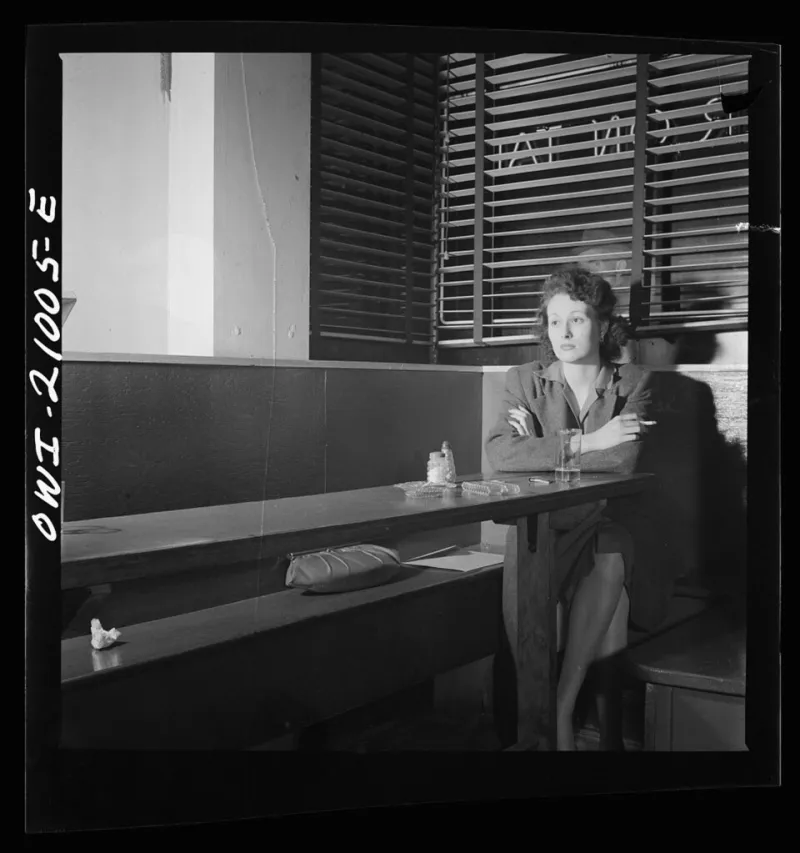
The Day My 'I'm Fine' Stopped Working on Everyone — Including Me

Photo: jhoc, CC BY 2.0, via Wikimedia Commons
I used to be very good at being okay.
Not actually okay — I want to be clear about that distinction, because it matters. I was good at performing okay. At radiating a kind of steady, low-maintenance competence that made other people comfortable. I was the one my friends called during their crises. I was the one who held things together at work when everyone else was spiraling. I was the one who showed up, handled it, and went home without making a fuss.
For a long time, I thought this was just my personality. A strength, even. In America, we have a whole cultural vocabulary for people like me — self-reliant, resilient, low-drama. These are compliments. I collected them the way other people collect degrees.
What I didn't understand, for a very long time, was that I had built a cage out of all that praise.
How the Identity Gets Built
The "I'm fine" identity doesn't usually arrive fully formed. It gets constructed piece by piece, usually starting young, usually in response to an environment where being not-fine carried some kind of cost.
For me, the cost was attention of the wrong kind. I grew up in a house where my mom struggled — anxiety, depression, the particular chaos that comes from untreated mental health issues in a family without the language or resources to address them. She needed a lot of managing. My dad managed her. My sister was young. So I managed myself, quietly and efficiently, and I learned very early that my needs were a lower priority than keeping the peace.
I don't say this to assign blame. My parents did the best they could with what they had, and I believe that. But the lesson I absorbed — your feelings are a burden, handle them privately — became the operating system I ran on for the next three decades.
By my mid-twenties, I had optimized the performance to near-perfection. I exercised regularly. I had a stable job. I maintained friendships. I called my mother every Sunday. From the outside, I looked like someone who had figured it out.
From the inside, I was running on fumes and calling it fuel.
The First Crack
I remember exactly when the facade started to splinter, because it happened in a grocery store in the cereal aisle, and the absurdity of the location has never fully left me.
I was thirty-four. It was a Tuesday evening in November. I was holding a box of granola and trying to decide whether I wanted the honey almond or the plain, and something about the smallness of the decision — the sheer mundane inconsequentiality of it — broke something open in me.
I stood there for what was probably thirty seconds but felt like several minutes, completely unable to choose. And then I put both boxes back on the shelf, walked to my car, and sat in the parking lot crying in a way I hadn't cried since I was a teenager.
Not about the granola. Obviously not about the granola.
About everything I had been swallowing for years. About how tired I was. About the fact that I could not remember the last time someone had asked how I was doing and I'd told them the truth. About the hollow, echoing feeling of being reliably fine for so long that I'd lost track of what I actually felt underneath it.
What Self-Sufficiency Costs
Here's the thing about being the person who doesn't need anything: eventually, people stop offering.
This isn't a criticism of my friends or family. It's just human nature. We direct our care toward the people who seem to need it. If you consistently signal that you're okay, the people around you — loving, well-meaning people — will believe you and redirect their energy accordingly. Why wouldn't they?
What this creates, over time, is a loneliness that's hard to name because it's self-constructed. I had built the walls myself. I couldn't exactly be angry at people for not climbing over them.
But I was angry. That was one of the first things I had to admit when I finally started therapy about six months after the parking lot incident. I was angry that no one had noticed I was struggling. I was angry that I'd had to be so capable for so long. I was angry at a version of myself I couldn't even fully access anymore — the one who had needed things and learned to stop asking.
My therapist, with the patience of someone who has heard this particular story many times, pointed out gently that anger is often grief in disguise. I was grieving the version of myself I'd never let exist.
What Broke, and What Came After
The unraveling wasn't cinematic. I didn't have a dramatic breakdown that forced everyone around me to finally see what was happening. It was quieter and more gradual than that — a slow loosening of the grip I'd kept on myself for years.
I started canceling plans when I was tired instead of pushing through. I started saying "I'm actually having a hard week" when people asked how I was. I started letting my apartment be messy sometimes and not treating it as evidence of personal failure.
Small things. But small things that, collectively, added up to something I hadn't experienced since childhood: the feeling of being allowed to take up space.
The most surprising part wasn't how my own life changed — though it did, slowly and significantly. The most surprising part was how my relationships changed. The friends I'd always thought of as people I supported started showing up differently when I let them. Turns out, some of them had been waiting years for me to need something. My self-sufficiency, which I'd always framed as a gift to the people around me, had actually been keeping them at arm's length.
Being fine all the time isn't generosity. I understand that now. It's distance with better PR.
The Ongoing Work
I won't pretend I've fully shed the identity. Some habits are structural — they go down to the foundation. I still feel a reflexive pull toward "I'm fine" when someone checks in. I still catch myself minimizing, deflecting, pivoting the conversation back to them before they can ask a follow-up question.
But I notice it now. That's the difference. I notice the impulse and I have enough of a pause to make a different choice.
Sometimes I still choose "I'm fine." Sometimes the moment doesn't call for more, or I don't have the energy to go deeper, and that's okay too. The goal was never to become someone who performs vulnerability the way I used to perform resilience — just trading one mask for another.
The goal was to become someone who actually knows the difference.
If you're the person in your circle who always has it together, who everyone leans on, who hasn't let anyone see you struggle in longer than you can remember — I'm not here to tell you that you're broken. You're not. But I will ask you one question, the same one I finally had to ask myself in a grocery store parking lot on a Tuesday night in November:
When's the last time you told someone the truth about how you were doing?
Not the polished version. The real one.