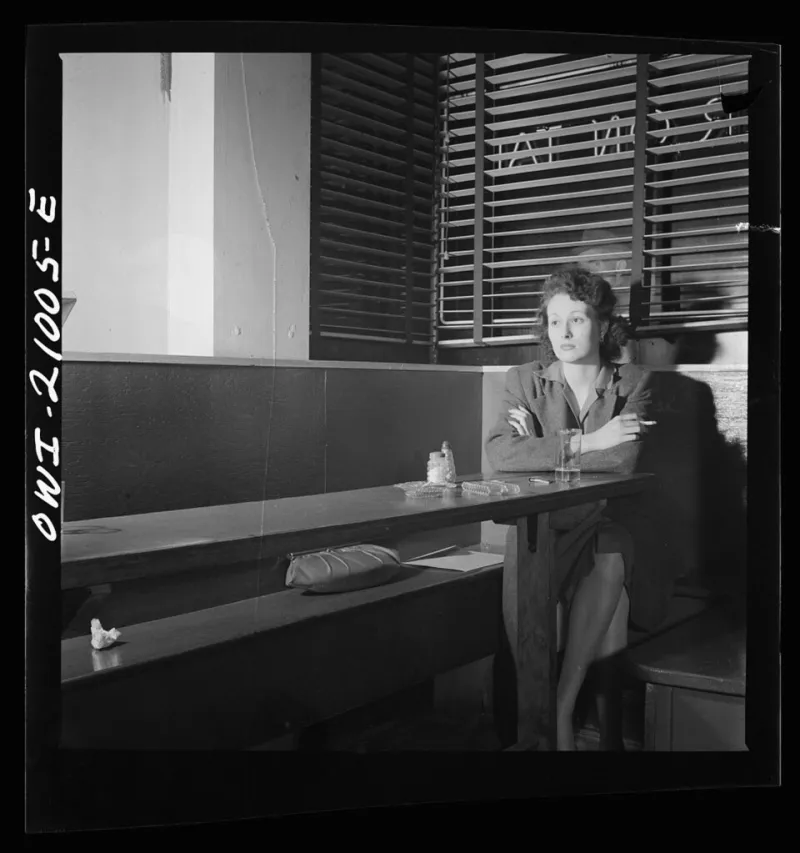
Nobody Told Me Grief Could Look Like This — So I Made Up My Own Rules

Photo: Cynthia Magana cynthmag, CC0, via Wikimedia Commons
My father died on a Wednesday in October, and by Friday I was fielding casseroles.
That's how it works, right? Someone you love is gone, and the world rushes in with food and flowers and that particular brand of hushed, careful kindness that signals everyone around you has entered a kind of social contract. You are The Grieving One now. There are expectations. There is a script.
I followed that script for a long time. Longer than I want to admit.
The Performance Begins
The funeral was a masterclass in doing grief correctly. I wore black. I shook hands. I said he's in a better place and thank you so much for coming approximately four hundred times. I cried at exactly the right moments — during the eulogy, when they lowered the casket, when my aunt squeezed my shoulder and said he was so proud of you.
People told me I was handling it beautifully. I took that as a compliment, which tells you everything.
Back at work two weeks later, I was careful. Composed but not cold. Sad enough that people felt comfortable offering condolences, but functional enough that nobody worried. I became an expert at the brief, dignified pause before redirecting a conversation. I learned the exact face to make when someone said grief comes in waves — a slow nod, a small grateful smile, like I was receiving wisdom instead of a platitude I'd already heard seventeen times.
I wasn't lying, exactly. I was just performing the version of loss that everyone around me seemed to need to see.
The Casseroles Run Out. The Grief Doesn't.
Here's what nobody tells you about the performative phase of mourning: it's exhausting in a way that compounds the original wound. You're not just carrying the loss. You're managing other people's comfort around the loss, which is a completely different kind of labor.
About four months in, the casseroles stopped. The check-in texts thinned out. The world, reasonably, moved on. And I was left alone with a grief I had never actually introduced myself to.
I didn't cry at the funeral home or in the church pew. I cried in the parking lot of a Sheetz gas station in rural Pennsylvania on a gray Tuesday in February, sitting in my car eating a bag of jalapeño chips, because a Tom Petty song came on the radio and my dad used to sing it off-key every single time.
That was the first moment it was real. And it didn't look anything like what I thought grief was supposed to look like.
What I Discovered When Nobody Was Watching
Once I stopped performing, I started noticing what my grief actually felt like underneath all the staging.
It wasn't always sadness. Sometimes it was anger — a sharp, inconvenient fury that my father didn't take better care of himself, that we wasted years being stubborn with each other, that I never got to show him who I turned out to be. That anger didn't fit anywhere in the approved grief script, so I'd been quietly suffocating it.
Sometimes it was relief, which felt so shameful I could barely acknowledge it. His last two years were hard. Watching someone you love diminish is its own particular kind of grief, one that starts long before they're actually gone. Feeling relieved that the suffering was over — his and mine — didn't make me a bad daughter. But I'd spent months convinced it did.
And sometimes grief looked like laughing until I cried at a stupid memory, or buying the exact brand of peanut butter he always bought even though I don't particularly like it, or talking to him in my car like he might actually answer.
None of that had an audience. All of it was real.
Giving Yourself Permission to Be Weird About It
There's a concept in psychology sometimes called disenfranchised grief — loss that society doesn't fully recognize or validate. But I think there's a quieter version of that, one that doesn't get talked about as much: the grief that gets too much external structure. The kind that gets so heavily choreographed by social expectation that the actual mourner gets lost inside it.
I had to actively give myself permission to grieve incorrectly.
That meant letting myself be fine on the anniversary of his death and a complete mess three weeks later for no discernible reason. It meant declining grief support groups because sitting in a circle talking about it wasn't what I needed, and being honest about that without guilt. It meant telling exactly two people what I was actually feeling and keeping the rest to myself, because some of it wasn't theirs to hold.
It also meant, eventually, talking to a therapist — not because I was broken, but because I finally had something real to bring to the room instead of the performance version.
What's on the Other Side
I'm not going to tell you I'm cured of grief. That's not how it works, and frankly, I'm not sure I'd want to be. Missing my father is proof that something mattered. I'll take that.
What I am is more honest. With myself, mostly. I know now that I can survive the inconvenient, ugly, contradictory shape of real loss — and that surviving it on my own terms is entirely different from surviving it on everyone else's.
If you're somewhere in the middle of this right now, I want to say something nobody said to me early enough: you don't owe anyone a grief that's easy to witness. Your loss belongs to you. The way you carry it is yours to decide.
The parking lot version counts just as much as the church one. Maybe more.