When the Script I'd Written in My Head Met Someone Who Hadn't Read It
I used to be a world-class rehearser. Not of speeches or presentations — of conversations that hadn't happened yet. Arguments I was bracing for. Confessions I was gathering the nerve to make. Apologies I wasn't sure I deserved to receive. I'd run them on a loop in my head while driving down the interstate, or standing in the shower until the water went cold, or lying flat on my back at 2 a.m. staring at the ceiling fan like it owed me something.
I had the whole thing mapped out. Their opening line. My response. The pause where they'd realize I was right. The moment the air would shift and we'd finally — finally — understand each other.
What I never once accounted for was the fact that they hadn't been in my bathroom rehearsing their half.
The Conversation I'd Been Carrying for Years
The one I kept coming back to was with my older brother, Daniel. We'd grown up close the way siblings sometimes do when the household is unstable — bound together by necessity more than choice. But somewhere in our late twenties, something cracked between us. A comment at Thanksgiving that I let fester. A favor I asked for that he declined in a way that felt more like a verdict than an answer. A slow, grinding distance that neither of us named because naming it would have made it real.
For three years, I rehearsed telling him how much that distance hurt. I practiced in the car on the way to family dinners, playing both parts, giving him the lines I needed him to say so I could deliver mine. I made him contrite in my head. Reflective. Ready to meet me where I was.
I had the whole scene choreographed.
And then one Sunday afternoon, he called me out of nowhere — not for any particular reason, just to talk — and something in me decided: now.
What Nobody Tells You About Unscripted Moments
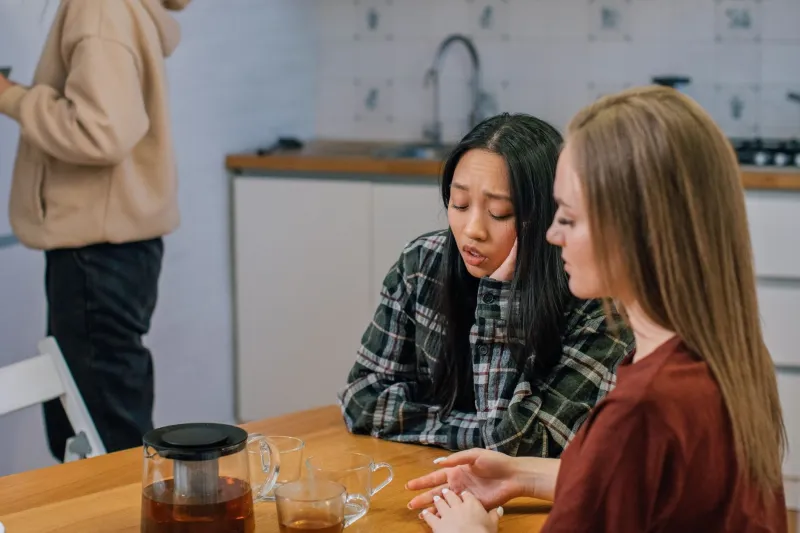
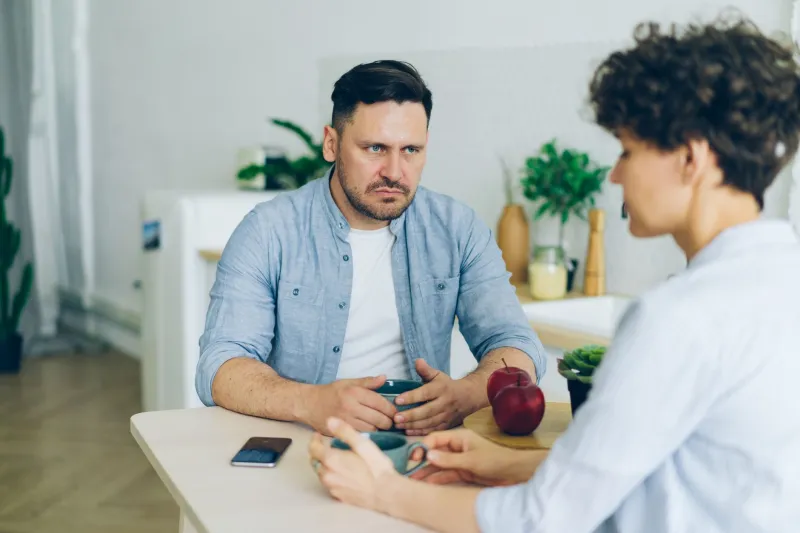
I started the way I'd practiced. Measured. Careful. I said something like, I've been wanting to talk to you about how things have felt between us lately. And I braced for my version of him — the defensive one, the dismissive one, the one I'd been arguing with in my head for three years.
Instead, he went quiet for a beat and then said, Yeah. Me too.
That's it. Two words. And every single thing I'd prepared dissolved like sugar in rain.
Because the conversation that followed wasn't the one I'd written. He said things I hadn't anticipated — not because they were shocking, but because they were his. His version of the same distance, seen from the other side of it. His guilt about the favor he'd declined, which had nothing to do with me and everything to do with something he'd been drowning in privately. His own 2 a.m. ceiling-staring.
I hadn't written any of that into the script. There was no version of my rehearsal where he was also hurting.
Why We Rehearse in the First Place
I've thought a lot about this since, and I don't think rehearsal is entirely the villain of the story. There's something useful about working through what you want to say before you say it — it's how we figure out what we actually mean, how we identify the feelings underneath the feelings. The problem isn't the preparation. The problem is when we start treating the rehearsal like the event itself.
When I rehearsed that conversation with Daniel, I wasn't preparing to connect with him. I was preparing to win something. To be understood on my terms, in my timing, with the emotional outcome I'd pre-selected. I was writing a one-woman show and casting him as a supporting character with no agency of his own.
Real conversations don't work like that. Real conversations require you to be present for someone who is also present — someone who walked in carrying their own rehearsals, their own fears, their own version of events that is neither more nor less valid than yours.
The Mess Is the Point
What I remember most about that Sunday phone call with Daniel isn't what either of us said. It's the feeling of the script leaving my body — that strange, almost physical release of letting go of the thing I'd been gripping so tightly. The conversation got messy in the middle. We talked over each other. I started crying in a way I hadn't planned to. He made a joke at exactly the wrong moment, and then apologized for it, and somehow that apology opened a door that all my careful words hadn't.
We didn't resolve everything that afternoon. Some of what had cracked between us is still a little uneven, the way a healed bone sometimes is — stronger in places, tender in others. But something real happened, and it happened because the script failed. Because I ran out of prepared lines and had to just be a person talking to another person.
I think about all the conversations I've delayed because the rehearsal in my head never felt quite ready. All the things I held back because the imagined version of the exchange went badly and I decided the real one would too. The relationship I let drift because I kept waiting for the perfect moment, the perfect words, the version of the other person who would respond the way I needed them to.
What I'd Tell the Woman in the Shower
If I could go back and say something to the version of me running that loop at 2 a.m., I'd tell her this: The conversation you're practicing is not the conversation you're going to have. And that's not a warning — that's the whole point.
The unscripted version, the one where neither of you knows exactly where it's going, is the only version where something true can happen. You can't choreograph your way into genuine connection. You can only show up, say the first honest thing, and trust that the other person — with all their unpredictability, all their own private rehearsals and baggage and grace — will meet you somewhere in the middle.
Most of the time, they do.
Not in the way you planned. Better, actually. In the way that's real.