I Waited Years for Someone to Say Sorry — Then I Realized I Was the One Who Owed Me an Apology
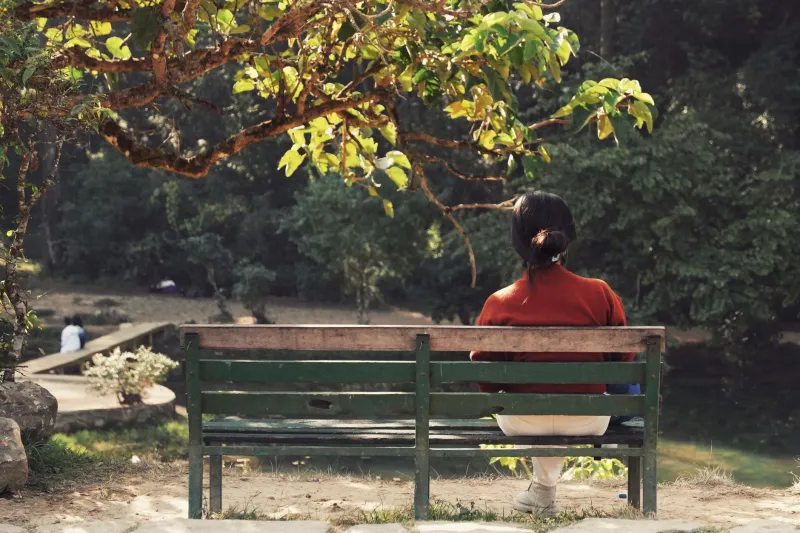
The Apology I Kept a Chair Out For
For about six years, I kept a version of a speech in my head. It wasn't mine. It was theirs — the person who had hurt me — rehearsed and refined until every word landed just right. In this imaginary monologue, they admitted everything. They named what they did. They said they were sorry. And in my head, every single time, I finally exhaled.
I carried that fantasy around like a stone in my coat pocket. Heavy. Constant. Kind of comforting in a strange way, because as long as I was waiting for their apology, I had a reason to stay exactly where I was — suspended, resentful, quietly furious. Waiting felt like a plan. It felt like something.
The problem was, they were never going to say it. Not because they were a monster, necessarily. Just because people who hurt you often don't know they did, or don't care enough to say so out loud, or have buried the whole thing under their own version of the story where they came out fine. The apology I needed didn't exist in them. It had never been there to begin with.
When Waiting Becomes a Life Choice
I think a lot of us do this without realizing we've made a decision. We don't say, I'm going to put my healing on pause until this other person comes through. We just... wait. We go to work, we see our friends, we laugh at things, but underneath all of it, there's this low hum of unfinished business. And unfinished business has a way of running the whole show from backstage.
Mine showed up in the way I talked about that person — or refused to. In the way I flinched when certain topics came up at dinner. In the way I was fine, totally fine, until suddenly I wasn't. Grief and resentment are sneaky like that. They'll let you believe you've moved on right up until the moment they prove you haven't.
A therapist I saw for a while used a phrase I've never forgotten. She said, "Waiting for an apology from someone who isn't coming is like standing in a parking lot waiting for a bus that doesn't run that route." She said it gently, but it hit me somewhere real. I had been standing in that parking lot for years. I had memorized the cracks in the pavement.
The Unexpected Turn
The shift didn't happen in a dramatic way. There was no lightning bolt, no tearful breakthrough scene. It happened on a pretty ordinary Tuesday, during a walk I took because I couldn't sit still. I was doing the thing I always did — mentally drafting their apology again, adding a new line, revising the tone — when something interrupted the loop.
A different thought. Quieter. Almost shy about showing up.
What if you apologized to yourself?
I almost laughed. It sounded ridiculous. Apologies go from the person who did wrong to the person who got hurt. That's the direction. That's how it works. But the thought didn't leave. It just sat there, waiting for me to take it seriously.
So I did. I sat down on a bench and I actually thought about it. What would I even say? What had I done to myself that deserved an apology?
Turns out — a lot.
What I Actually Owed Myself
I'm sorry for staying when every part of me was screaming to go. I'm sorry for explaining away behavior that had no good explanation. I'm sorry for deciding that keeping the peace was more important than keeping my own sense of what was real. I'm sorry for telling myself I was being dramatic, too sensitive, too much — because that's what I'd been told, and I believed it.
I'm sorry for all the years I spent building a case against someone else instead of building a life for myself.
When I started going through that list — not in a self-punishing way, but in a genuinely reckoning kind of way — something loosened. Not everything. Not all at once. But something.
Because here's what I'd never considered before: the resentment I was carrying wasn't just about what they did. It was also about what I had allowed. About the times I'd overridden my own instincts. About the ways I'd made myself smaller to make the situation more manageable. I had participated in my own mistreatment, not because I was weak, but because I was human and scared and doing the best I knew how to do at the time.
And that version of me — the one who was just trying to survive a hard situation — deserved some grace.
Forgiving Yourself Isn't Letting Them Off the Hook
I want to be clear about something, because I think this gets muddled. Apologizing to yourself, forgiving yourself, releasing the need for their acknowledgment — none of that means what they did was okay. It doesn't mean you're minimizing it or pretending it didn't happen or deciding they were actually a good person all along.
It just means you're choosing to stop making your healing dependent on their participation.
They don't get a vote in your recovery. They never did, even though it felt like they did. The apology you needed was always going to have to come from somewhere that was actually within reach. And you — the present-day you, the one who has learned things and grown things and survived things — you have the authority to offer that to yourself.
That's not a consolation prize. It's actually the real thing.
What Comes After
I won't pretend that one internal apology fixed everything. Healing doesn't work like a switch you flip. But it changed the texture of things. The low hum got quieter. The mental drafts of their speech started to feel less urgent, then less interesting, then mostly irrelevant.
I still think about what happened sometimes. I probably always will. But I'm not standing in that parking lot anymore. I took myself home.
If you're out there waiting for someone to come through with the words that will finally let you breathe — I get it. I really do. The longing for that is legitimate, and it makes complete sense. But I'd ask you to consider, gently, whether there's an apology you might be able to offer yourself in the meantime. Not instead of theirs. Just alongside the waiting.
You might find, like I did, that it's the one that actually does something.